EN
EN UA
UA



 Login
Login 

Software for a flower shop: how to automate inventory and stop losing money on perishable goods




The flower business is not just about selling flowers
A flower shop is one of the most romantic types of business. And also one of the most complex from an accounting standpoint. You sell goods that stay alive anywhere from a few hours to a week, you depend on seasonal peaks (March 8, Valentine’s Day, graduation season), and at the same time you have to keep an attractive assortment on hand every single day.
If you’re currently keeping records in a notebook or Excel, this article is for you. Let’s look at what problems a modern flower shop program solves and what to consider when choosing a system.
Typical accounting problems in a flower shop
1. Perishable goods and invisible losses
Imagine: you ordered 200 rose stems before a holiday. You sold 140, the rest get written off. Without systematic accounting, you don’t even know what percentage of your stock you’re losing every week. And that’s a direct loss.
The average write-off rate in flower shops without automated accounting is 15–25% of purchases. With a properly configured system, this figure can realistically be reduced to 5–8%.
2. Lack of assortment analytics
Which flowers bring in the most profit? What sells better on weekdays versus weekends? Without numbers, these decisions get made “by feel” — and are often wrong.
3. PRRO (fiscal cash register) issues
Since 2022, most sole proprietors (FOPs) in Ukraine have been required to use a cash register (RRO) or software cash register (PRRO). Flower shops are no exception. Many owners still either operate without fiscalization (risking fines) or use cumbersome solutions that aren’t integrated with the checkout. For a detailed look at choosing between RRO and PRRO, see the article: “RRO or PRRO in 2025 — Which Should an Entrepreneur Choose.”
4. Inefficient purchasing management
Without data on stock levels and sales dynamics, ordering goods is always a gamble. Order too little — you get shortages during peak demand. Order too much — you get write-offs after the holiday.
5. Complex accounting for bouquets and arrangements
A bouquet isn’t a single product — it’s a set of components: stems of various flowers, greenery, packaging material. A proper system lets you track inventory both by component and by finished product.
What a flower shop program should be able to do
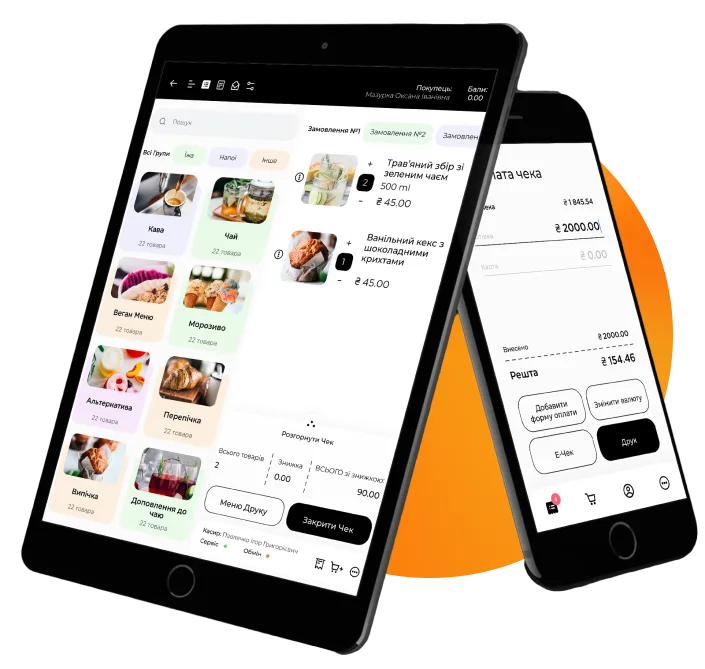
Real-time stock tracking. The system records every delivery from a supplier and every sale. You always know how many stems of each type are in stock. As stock approaches a critical level, the system alerts you.
For more on the principles of goods tracking, see: “How to Track Inventory with PayKit POS.”
Receiving and write-off documents. Every batch from a supplier is a separate receiving document. Spoiled goods get a write-off document. Together these create an accurate picture of stock movement and let you keep control over staff.
Sales analytics. Reports on revenue, average check, and top products for any period. Understanding which items bring in 80% of profit (ABC analysis) helps you shape your assortment and orders correctly. To learn how to work with analytics to boost profit, read: “How to Increase Average Check with PayKit POS Analytics.”
Built-in PRRO. PayKit has its own built-in PRRO with no monthly surcharge — free connection and setup, easy switching between fiscal and non-fiscal mode, and electronic receipts for customers without any extra equipment.
Loyalty program. Repeat customers are the backbone of the flower business. Discount cards, points accumulation, discounts on specific dates (a customer’s birthday) — all of this can be configured in the system with minimal effort.
Offline operation. A flower kiosk might be located somewhere with a weak internet connection. PayKit works offline and syncs with the cloud once the connection is restored — sales never stop.
For a small flower shop (1–3 locations)
If you have one shop or a few kiosks, your priorities are:
- Fast checkout — find the item in seconds via search, barcode, or catalog selection
- Cashless payments — PayKit supports Tap to Phone (turning a smartphone into a terminal), plus acquiring with Monobank, Oschadbank, and other partner banks
- PRRO without extra costs — built in, free to connect
- Basic analytics — daily/weekly revenue, best-selling items
- Stock control — know what’s running low so you can reorder in time
If you’re just planning to open a shop, we recommend reading: “How to Open a Flower Shop in Ukraine” and build a well-managed business from day one.
For a flower shop chain (4+ locations)
As a chain grows, new challenges appear: how to control stock across all locations, how to standardize staff work, how to compare results between different shops.
Centralized management. One dashboard for all locations. A single product and price catalog, centralized promotion management. Change one item’s price and it updates instantly across every location.
Transfers between locations. A surplus of roses at one location can be transferred to another through the system — with documentation, confirmation, and real-time stock updates.
Comparative analytics. Revenue for each location over any period, comparison of average checks, top performers. Understand which location is underperforming, and why.
Inventory counts without stopping sales. Regular inventory counts in a flower business aren’t a luxury — they’re a necessity. PayKit lets you conduct a recount without halting sales. Why this matters and how to organize it — read: “Why It’s Important to Conduct Inventory Counts Regularly?”
And on how to know your business is ready to scale — see: “5 Reasons Your Shop Is Ready to Scale.”
Conclusion
A flower business demands precise accounting — and that's no exaggeration. Every spoiled stem, every missed purchase due to lack of data, every cash discrepancy is real money lost. The right flower shop software isn't just a checkout system. It's a business management tool: stock control, assortment analytics, a loyalty program, and a built-in PRRO — all in one solution. PayKit is ready to work from day one — free training, support via messenger or phone, and PRRO setup with no extra charge. Learn more at paykitpos.com.