EN
EN UA
UA



 Login
Login 

Optical store automation: from lens inventory management to online sales and fiscal receipts


Why Optical Retail Is a Special Case
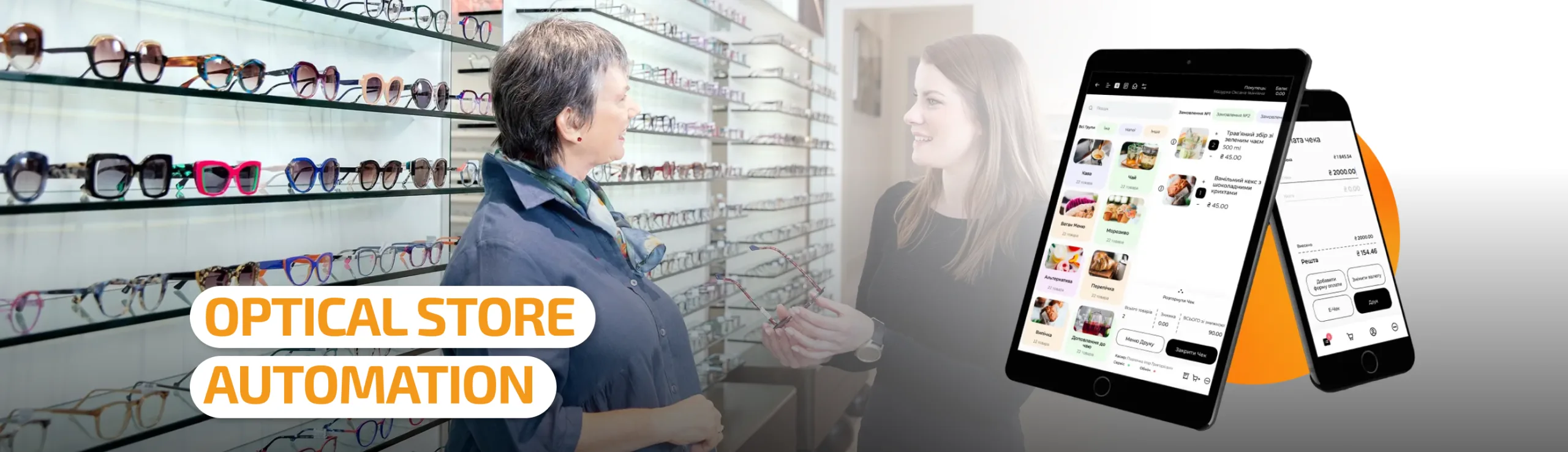
An optical store is simultaneously a retail shop, a service center, and partially a healthcare business. It sells ready-made glasses and contact lenses, manufactures prescription eyewear, performs vision tests, and provides warranty services.
This combination of business processes means that a standard POS solution designed for a grocery store or fashion boutique is often insufficient. Let’s explore what true optical store automation looks like and how to choose a solution that addresses all these specific requirements.
Specific Inventory Management Challenges in Optical Retail
Complex Product Catalog Structure
A single eyewear item may include a frame from a specific manufacturer, model, material, and color, combined with lenses that have particular diopters, coatings, and materials. This results in dozens of attributes for a single product. Without a properly configured product directory with attributes, managing such an assortment becomes nearly impossible.
Services Alongside Products
Vision testing, lens fitting, eyewear manufacturing, and frame repair are all services that may appear on the same receipt as products. The system must support services as separate items with independent accounting.
Warranty and Service Operations
A customer may return a month later because a lens is scratched and needs replacement, or a frame has cracked and requires warranty repair. These operations must be recorded and tracked separately from regular sales.
Multiple Price Levels
Retail pricing for regular customers, corporate pricing for partners (such as insurance companies), and discount card pricing should all coexist within the system and be applied automatically.
Fiscalization and Online Sales
More and more optical stores are adding online ordering and e-commerce capabilities. Every such transaction requires a fiscal receipt. Modern software-based fiscalization solutions fully address this requirement: an electronic receipt is generated automatically and delivered to the customer without any additional hardware.
Learn more about choosing between traditional and software fiscal solutions: RRO or PRRO in 2025 — What Should a Business Owner Choose?
What a POS System for Optical Stores Should Offer
Flexible Product Directory with Attributes
Each catalog item should include a complete set of attributes: brand, model, frame material, lens diopters, coating type, and more. Cashiers should be able to search by any attribute or barcode, which speeds up customer service and reduces errors.
Service Accounting as Separate Items
Vision testing, lens fitting, and lens manufacturing should all be registered as separate receipt items with individual pricing. Analytics can then clearly show how much revenue comes from services versus product sales.
Multiple Pricing Levels
Different customer categories require different prices. Everything should be configured in a cloud-based management panel and applied automatically according to the selected pricing level.
Learn more: How to Choose an Inventory Management System for SMBs
Loyalty Program
Discount cards, reward points, and repeat-visit discounts are especially important because a returning optical customer is significantly more valuable than a one-time buyer. The system should support any loyalty program structure.
Category and Service Analytics
You should be able to see the profitability of every business segment: eyeglasses, contact lenses, sunglasses, and services.
ABC analysis helps identify which products generate the highest profits.
Learn more: Effective Inventory Management with PayKit POS
Cloud Management
A cloud-based back office provides access to data from any device. For optical chains, it enables a shared customer database, centralized loyalty management, and unified pricing and promotions.
Learn more: Cloud POS System vs. Local POS System
For a Single Optical Store
If you operate a single location, focus on three key areas:
- Fast and accurate inventory management with product search by barcode, SKU, or attributes, and the ability to combine products and services on a single receipt.
- Hassle-free fiscalization with free setup and built-in functionality without monthly fees.
- A loyalty program that encourages customers to return to your store instead of choosing competitors.
Learn more: Store Launch Algorithm: Opening a Retail Location from Scratch
For Optical Store Chains
As your network grows, system requirements change.
Centralized Management
One management panel for all locations. A single product catalog, unified pricing rules, and a shared customer database. Price changes and promotions are instantly applied across all stores.
Inventory Control Across Locations
Product transfers between stores are managed through the system with proper documentation and real-time inventory updates. No phone calls or manual records are required.
Access Rights Management
Cashiers see only their own store’s POS. Store managers can access all information related to their location. Network directors have a complete overview of all stores. Franchise operations can be assigned separate access levels.
Inventory Counts Without Business Interruptions
Optical stores often stock expensive products in limited quantities, making accurate inventory control especially important. PayKit allows inventory counts without stopping sales operations.
Learn more: Why Regular Inventory Counts Matter
Conclusion
Optical store automation is not a luxury—it is a competitive necessity. Today's customers compare not only prices but also service quality, checkout speed, and loyalty benefits. PayKit addresses the unique requirements of optical retail with a flexible attribute-based catalog, combined product and service accounting, multiple pricing levels, loyalty programs, built-in fiscalization, and cloud-based chain management. Free training, fiscalization setup, and technical support are included. Learn more at paykitpos.com.